
When frost builds up only on the top shelf of a freezer, something deeper is often at play. Most freezers work by circulating cold air through internal ducts. If those ducts get blocked or restricted, airflow becomes uneven. That’s when frost can start forming in strange places, like the top shelf only. This post breaks down the symptoms, checks, and fixes for restricted air channels, so we can help our freezers work like they should.
Uneven Frost Patterns Point to Airflow Problems
Many freezers rely on fans to push cold air from the evaporator through internal air channels. These channels direct cold air evenly across all shelves. If something blocks one of them, air can’t spread properly. As a result, frost may collect on a single shelf where the cold air pools.
This type of buildup usually feels soft and feathery, not hard like ice. That tells us moisture in the air is freezing too quickly on surfaces. Often, the coldest area in a blocked system is the top, where heavier air stays trapped and can’t circulate well.
It’s important to avoid brushing it off without checking deeper. To learn more about how to spot issues with similar patterns, we recommend starting at appliance repair in Edmonton.
What Causes These Channels to Restrict
Sometimes the reason is as simple as food blocking vents. Containers placed right up against the back wall stop air from flowing where it needs to go. Rear vents, side ports, or ceiling grilles must stay clear for the freezer to work properly.
However, the root cause is not always visible. Plastic panels covering ducts can hide ice blockages that form when moisture enters the wrong way. That usually happens when the freezer door stays open too long or a gasket fails. Evaporator frost may melt, drain poorly, and refreeze inside a duct.
Likewise, failed fans or sensors can throw off temperature balance. If the defrost cycle stops working as intended, ice can grow inside air tunnels over time. When that happens, only disassembly and inspection will reveal the actual cause.
When this kind of issue affects your unit, it helps to speak with a team that handles freezer repair in Edmonton.
How to Check for Blocked Airflow at Home
There are a few safe steps we can take to narrow down the problem. First, empty the freezer just enough to look at the airflow vents. Every shelf should have access to some kind of opening that lets air in or out. If we find a container pressed against a vent, we can move it and wait 24 hours.
Next, listen for the freezer fan when the door is closed. Some models keep it running when only the light switch is pushed. A quiet motor may mean it’s stuck or worn out. Also, feel for airflow coming out of the vents. If it feels weak or missing from lower shelves, the ducts may be blocked.
To reset internal frost, unplug the freezer for 12 to 24 hours with the door open. That allows hidden ice to melt. But be cautious—this is only a test. If frost returns after the reset, that points to a deeper issue inside the system.
We’ve seen many cases like this. If you’d like professional help, you can contact JAY Appliances and we’ll take a look.
Long-Term Effects of Ignoring Restricted Airflow
When cold air doesn’t circulate properly, the freezer works harder to maintain its temperature. That means longer run times and more power use. In extreme cases, compressors overheat and shorten their lifespan.
Frozen food near the top may become freezer-burned, while items on the bottom stay too warm. That puts food safety at risk and leads to spoiled goods. Over time, uneven cooling can even affect refrigerator performance if the two share an evaporator coil.
Ignoring these symptoms may also mask other problems like defrost timer failure, clogged drains, or gasket leaks. Those can grow into more expensive repairs if not addressed early. Spotting top-shelf frost is like catching a small leak in a roof—it warns us before real damage sets in.
So it’s worth taking seriously, especially if the pattern keeps coming back even after cleaning or defrosting.
What Technicians Look for During Diagnosis
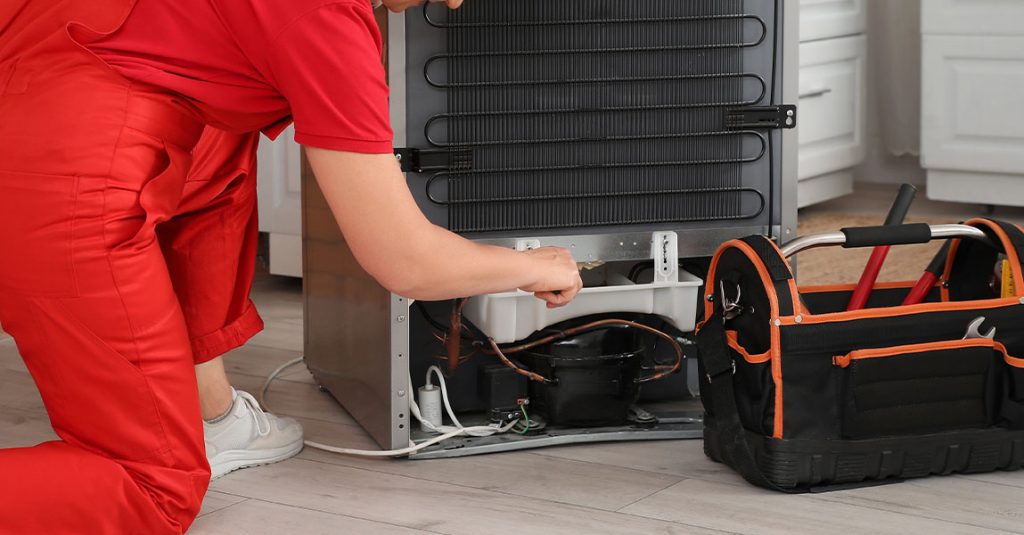
When we visit a home with this issue, we always begin by inspecting airflow inside the freezer. We use our hands and temperature sensors to check for uneven cooling zones. If airflow is weak at the bottom, we remove panels and check the fan, vents, and evaporator.
Technicians also test door gaskets for leaks, inspect the defrost drain, and confirm fan operation with the door switch. In many cases, we find hidden frost inside a duct. When that’s removed and the cause addressed, frost buildup on the top shelf stops completely.
We sometimes need to test thermostats and sensors as well. When they read incorrectly, they can cause the defrost cycle to run too short or too long. Either issue can lead to frozen channels and poor performance.
Repair isn’t always about parts. It’s often about restoring balance so air can flow the way it was designed to. That’s how we help appliances run better for longer.
FAQ
Why does frost only form on the top shelf of my freezer?
This usually means air channels are blocked, preventing cold air from spreading evenly. The top shelf then gets too much moisture and forms frost.
Can I fix restricted airflow by defrosting the freezer?
A full defrost can melt hidden frost in air ducts. However, if the problem returns, it means something deeper is wrong and needs repair.
What blocks the air channels inside a freezer?
Ice buildup from poor drainage or long door openings often causes it. In other cases, food packed too close to vents blocks airflow.
Is frost on one shelf dangerous for food?
Yes, because uneven cooling may spoil food on lower shelves. Items near the frost may also get freezer burn more easily.
When should I call a technician for this issue?
If frost keeps returning after defrosting or cooling feels uneven, a technician should check the fan, vents, and defrost system.